Kinglucky Upgraded Clip-On Earbuds, Open Ear Wireless Earbuds Bluetooth 6.0

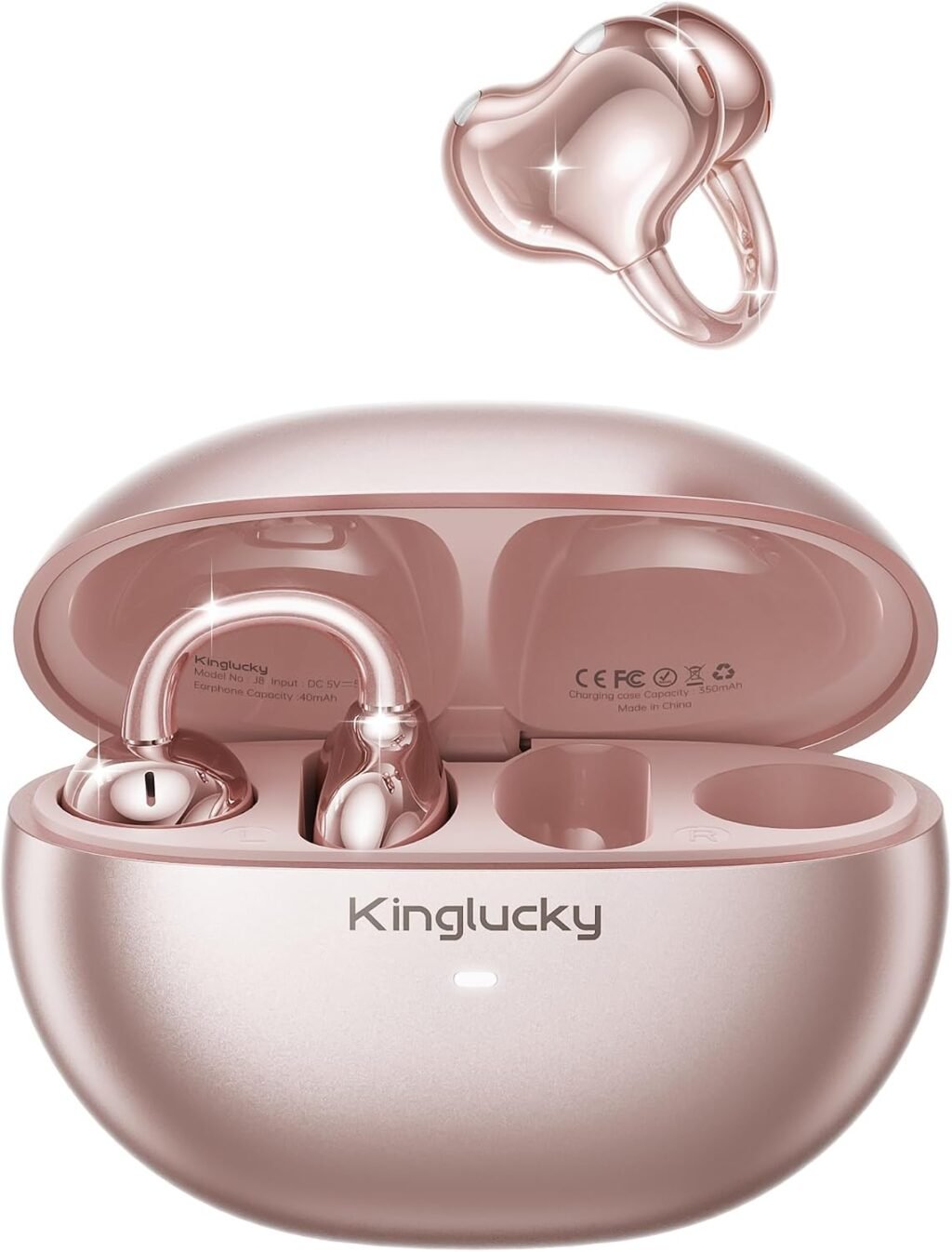


Kinglucky Upgraded Clip-On Earbuds: An Open-Ear Bluetooth 6.0 Option
Open-ear earbuds have carved out a distinct place in the wireless audio market, and the Kinglucky Upgraded Clip-On Earbuds represent the company’s latest attempt to refine that formula. Rather than sealing off the ear canal, these earbuds clip onto the ear and rest near it, leaving the canal uncovered. Kinglucky describes this as a fully upgraded version of its earlier clip-on model, with changes drawn from user feedback. This review walks through what the supplied product information actually says about the design, features, battery, and connectivity so you can judge whether this open-ear approach matches how you listen.
Design and Fit
The most notable design change is weight. Each earbud is listed at 4.0 grams, which Kinglucky states is 25 percent lighter than the previous version. Lower weight is a meaningful consideration for a clip-on design, since the earbud hangs on the ear rather than sitting inside it. The company frames the result as a pressure-free fit, and the open-ear structure means there is no in-ear seal to create the plugged feeling some listeners dislike.
The fit is adjustable rather than fixed. A flexible C-shaped bridge reinforced with Ni-Ti memory wire allows the wearer to pinch the bridge narrower for a more secure hold or widen it for a more relaxed feel. The earbud can then be slid up or down to position the speaker near the ear canal. This kind of manual adjustment is worth understanding before purchase: the fit is something you tune yourself, not a one-size shape that either works or doesn’t. Kinglucky also states the design works comfortably with glasses and earrings, which matters for anyone who already wears items around the ear.
Features and Technology
Audio hardware centers on a 12mm dynamic driver paired with what Kinglucky calls a Hi-Pure Sound Gen 2 dual-diaphragm acoustic design. The company describes the intended result as clearer vocals, richer mids, and balanced detail for music, podcasts, and audiobooks. These are stated design characteristics rather than independently verified performance figures, so they are best treated as the manufacturer’s description of the tuning rather than a guarantee.
For calls, the earbuds use dual-microphone ENC, which Kinglucky says helps reduce surrounding noise during calls. ENC, or environmental noise cancellation, is a processing approach aimed at call clarity rather than at blocking sound for the listener. Touch controls are also included and described as smarter, though the supplied information does not detail the specific gestures or functions available.
Open-Ear Listening and Everyday Experience
The defining trait of these earbuds is awareness. Because the open-ear design leaves the ear canal uncovered, nearby sounds remain audible while audio plays. Kinglucky presents this as a benefit for walking, commuting, and working out. In practical terms, that means you can hear traffic, announcements, or a colleague speaking without removing an earbud, though it also means your audio shares space with the environment rather than isolating you from it. Listeners who want immersion or strong passive isolation should recognize that this design intentionally does the opposite.
The IP56 rating is another point aimed at active use. Kinglucky states that IP56-rated protection and a hydrophobic coating help resist sweat, rain, and everyday splashes. That rating describes resistance to dust and water exposure, not proof against submersion, and the company does not make a durability claim beyond that rating. For workouts, commutes, and general outdoor use, the stated protection aligns with the scenarios Kinglucky highlights.
Battery, Bluetooth, and Compatibility
Battery figures are stated at up to 6 hours of listening per charge and up to 40 hours total with the charging case. Kinglucky notes that playtime is based on testing at 60 percent volume and that battery life may vary with volume and usage conditions. Real-world runtime will therefore depend on how loudly you listen and how you use the earbuds, so the 6-hour and 40-hour numbers are best read as upper figures under the stated test conditions.
Connectivity runs on Bluetooth 6.0, which Kinglucky describes as delivering fast, stable pairing. Multipoint support is included, meaning the earbuds can connect to more than one device and switch between them. Kinglucky specifically mentions moving between a phone, tablet, and laptop throughout the day, which is the practical use case multipoint is designed for. The supplied information does not list supported Bluetooth codecs, so codec compatibility cannot be confirmed here.
Who Are These Earbuds Best For?
Based on the stated design and features, these earbuds suit listeners who want audio while staying aware of their surroundings. The open-ear structure and IP56 rating point toward walking, commuting, and workout scenarios, which Kinglucky names directly. The adjustable memory-wire bridge and the note about glasses and earrings make them a reasonable consideration for people who wear eyewear or jewelry around the ear and find in-ear designs uncomfortable. Multipoint support fits users who regularly move between several devices. Conversely, anyone seeking strong noise isolation or a sealed in-ear fit is looking at a different category of product.
Final Verdict
The Kinglucky Upgraded Clip-On Earbuds present a coherent open-ear package: a lighter 4.0-gram build, an adjustable Ni-Ti memory-wire bridge, a 12mm dynamic driver with a dual-diaphragm design, dual-mic ENC for calls, IP56 protection, up to 6 hours per charge and 40 hours with the case, and Bluetooth 6.0 with multipoint. The appeal depends entirely on whether open-ear listening matches your priorities. If awareness, a pressure-free fit, and device switching matter more than isolation, the stated features line up well. If you want to shut out the world, the design works against that goal by intention. The sound and comfort descriptions come from Kinglucky itself, and the battery figures are tied to stated test conditions, so treat those claims accordingly and weigh them against how you actually listen.
View on Amazon