TOZO OpenEarRing Open Ear Earbuds 40H Bluetooth 5.4 Lightweight Comfort



TOZO OpenEarRing Open Ear Earbuds: An Open-Ear Design Built Around Awareness and Fit
Open-ear earbuds occupy a distinct space in the personal audio market. Rather than sealing off the ear canal, they sit outside it, leaving the wearer connected to the surrounding environment. The TOZO OpenEarRing is a clip-on style open-ear earbud that leans into that idea, pairing an ergonomic arc shape with a lightweight build, Bluetooth 5.4, and a charging case rated for extended playback. This review walks through what the product information actually says, what those features mean in practice, and where the OpenEarRing is likely to make the most sense.
Design and Build
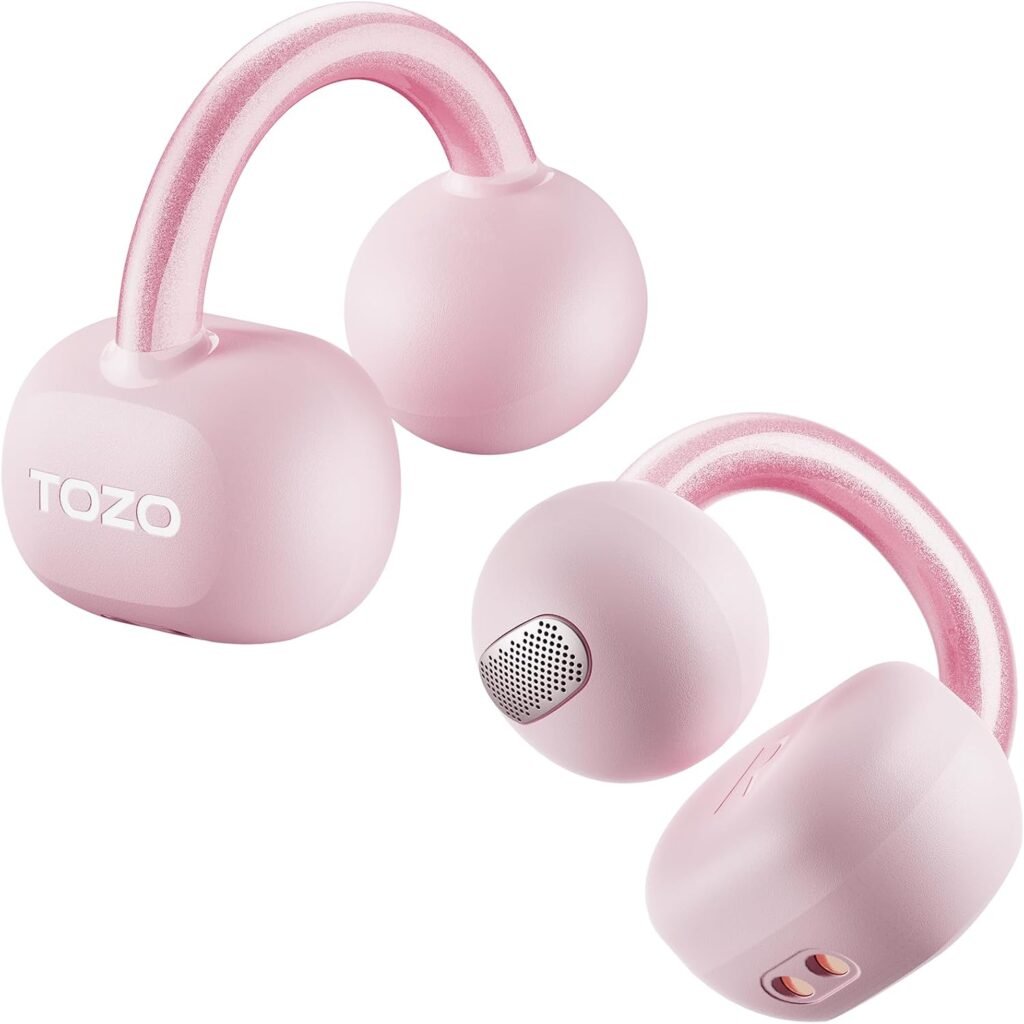
The OpenEarRing uses an open-ear clip design, with each earbud weighing in at just 5.1 grams. That figure matters because clip-on earbuds rest against the ear rather than inside it, so weight and clamping force are central to how the design is experienced over time. TOZO describes an ergonomic arc shape with a “perfect clamping force” intended to keep the fit stable and secure, and the materials list includes high-resilience components alongside skin-friendly silicone.
The construction also incorporates a durable memory steel wire, which is the structural element that gives the clip its shape and flexibility. The silicone covering is described as skin-friendly, and TOZO states that it should not cause irritation even during long wear. Those are stated product claims rather than independently verified results, but they point to a design philosophy focused on extended, low-pressure use.
One of the more specific design choices is the glasses-wearer focus. TOZO states the open-ear clip is engineered to fit alongside glasses frames without clashing, and the low 5.1-gram weight is presented as a way to avoid added pressure for people who already wear spectacles all day. For anyone who has struggled to combine earbuds with eyewear, that is a meaningful design consideration.
Features and Technology
On the audio side, TOZO lists several proprietary technologies. OrigX Acoustic Tech is described as delivering hi-res stereo resolution intended to capture vocal detail and instrumental layers, while Bass+ Acoustics is stated to boost low-frequency performance for a more powerful low end. TOZO also claims deep bass, clear highs, and detailed vocals as part of the overall sound profile. These are manufacturer descriptions of the intended sound character, not measured results.
Customization comes through the TOZO app, which offers 32 preset EQ modes covering genres such as jazz, blues, and classical, plus access to more than 2,000 personalized EQ profiles shared by users. That gives listeners a way to adjust the tuning rather than accepting a single fixed sound signature.
Call handling relies on a TOZO Labs self-developed AI algorithm that is stated to reduce background noise during calls, with the aim of keeping voices clear even on busy streets. Controls are handled through simple button presses on the earbuds, covering answer and hang-up as well as music playback. TOZO frames this button approach as convenient for situations like driving, exercising, or running.
Connectivity and Battery
The OpenEarRing uses Bluetooth 5.4, which TOZO describes as offering faster transmission speed and more stable transmission. The company also cites optimized anti-interference and strong signal penetration, with stable connectivity stated at up to 15 meters — enough, in TOZO’s example, to leave a phone in one room while moving around another or to keep a device set aside during a workout. Pairing is handled in one step: removing both earbuds from the case triggers automatic pairing with the device.
Battery figures are split between the earbuds and the case. TOZO states up to 10 hours of playback on a single charge, with the charging case adding a further 30 hours for a total of up to 40 hours. The case includes a digital display and charges via Type-C. TOZO’s SmartPow technology, described as exclusive algorithms for precise power control combined with a low-power chip, is presented as part of how that endurance is managed. As with any battery rating, actual results can vary with volume and use.
Performance and Everyday Experience
The defining characteristic of the OpenEarRing is environmental awareness. Because the ear canal stays open, TOZO positions the earbuds around staying alert to ambient sounds such as traffic and sirens while music plays. That framing runs through nearly every use case the company describes: workouts, outdoor activities, commuting, and office work.
For sports, TOZO points to the stable fit, the awareness of surroundings, and the ability to listen to dynamic music simultaneously. The earbuds carry an IPX5 water-resistance rating, supported by a protective nano-coating, which TOZO says addresses sweat and rain during outdoor pursuits. IPX5 indicates resistance to water jets rather than full submersion, so it is best understood as protection against sweat and wet weather rather than swimming or heavy immersion.
In an office setting, the open design allows wearers to talk with colleagues while audio continues through the earbuds — a practical benefit that closed designs cannot easily match. For studying and lectures, the glasses-friendly clip design is presented as comfortable for extended listening sessions. At home, TOZO describes the sound as rich enough to enhance favorite music, and the OrigX technology is also pitched toward movie watching, where it is said to restore dialogue clarity and background detail.
Who Is This Product Best For?
Based on the stated design and use cases, the OpenEarRing suits several specific groups. People who wear glasses and want earbuds that do not compete with their frames are a clear target, given the dedicated design focus. Runners, cyclists, and outdoor exercisers who want music while remaining aware of traffic and surroundings are another natural fit, particularly with the IPX5 rating in mind. Office workers and students who need to stay reachable and aware during the day also align with the open-ear concept. Finally, anyone who dislikes the pressure or occlusion of in-ear designs may find the clip-on, 5.1-gram approach worth considering.
Final Verdict
The TOZO OpenEarRing is a thoughtfully specified open-ear earbud built around awareness, light weight, and glasses compatibility. Its strengths, as described, lie in the 5.1-gram clip design, the environmental awareness that comes with an open fit, Bluetooth 5.4 connectivity, and a battery system rated at up to 40 hours total with a digital display case. The app-based EQ customization and AI-assisted call noise reduction add practical depth. The trade-off inherent to open-ear designs is that they do not seal the ear, so listeners seeking isolation should look elsewhere. For those who prioritize staying connected to their surroundings, wearing glasses comfortably, and long listening sessions, the OpenEarRing presents a coherent, purpose-built option.
View on Amazon